Spread Kindness Retro Character Design: A Visual Asset
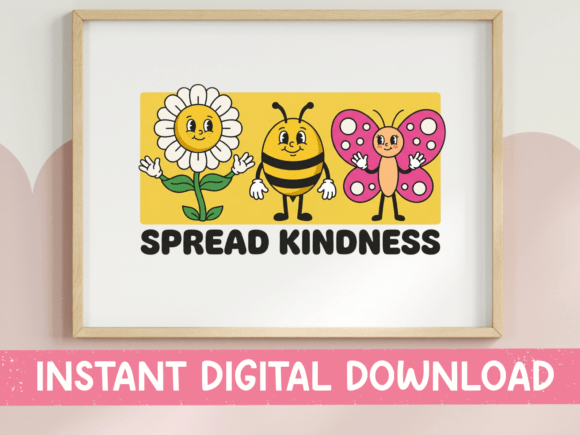
Three cheerful retro characters — a white daisy with a smiling face, a grinning bee, and a pink butterfly — stand side by side on a bright yellow banner, instantly capturing attention and setting a positive tone. This is the essence of the Spread Kindness Retro Character Design, a visual asset that merges nostalgic charm with a clear, uplifting message. In a digital landscape often saturated with sleek minimalism, this style offers a refreshing burst of personality, making it a powerful tool for designers seeking to create memorable and emotionally resonant work.
At its core, this design approach leverages retro aesthetics—bold outlines, limited color palettes, and whimsical illustrations—to convey warmth and approachability. For graphic designers and brand strategists, understanding its application is key to enhancing visual communication. It’s not just about decoration; it’s about building a visual language that speaks directly to the viewer’s emotions, fostering instant connection and recall.
Why This Style Matters in Modern Design
In an era of digital overload, visual design that evokes genuine feeling cuts through the noise. The retro character style excels here. Its simplicity ensures clarity, while its playful nature boosts user engagement. When applied thoughtfully, it strengthens brand identity by making a company feel more human, relatable, and trustworthy. This is particularly valuable in sectors like wellness, education, family-oriented services, and community-focused brands, where conveying kindness and positivity is a core part of the messaging.
Practical Applications Across Creative Projects
The versatility of the Spread Kindness Retro Character Design allows it to shine across numerous applications. Consider integrating these charming assets into:
- Branding and Logo Design: Use a simplified character as a mascot or icon to add a friendly face to a brand identity system.
- Social Media Content: Create engaging posts, stories, and animated graphics that stand out in feeds and encourage shares.
- Website and UI Design: Incorporate characters as loading animations, guide illustrations, or decorative elements to enhance user experience (UX) with delightful micro-interactions.
- Packaging and Print Design: Apply the style to product labels, stickers, or promotional materials to create a tactile, memorable unboxing experience.
- Marketing Materials and Presentations: Use characters to break up text-heavy content in brochures, slides, or email headers, improving visual hierarchy and readability.
Tips for Effective Implementation
To maximize the impact of such creative assets, thoughtful selection and integration are crucial. First, ensure consistency. The retro style should align with your existing brand color palette and overall aesthetic. If your brand is modern and corporate, use these characters as accent elements rather than the primary focus. Second, prioritize scalability and clarity. The bold lines and simple shapes of retro characters are excellent for maintaining legibility at various sizes, from a favicon to a billboard.
Finally, consider your audience and design goals. This style naturally appeals to a broad demographic but is especially effective for campaigns centered on positivity, community, or nostalgia. Use it to guide the viewer’s eye, create a visual hierarchy that leads to a call-to-action, or simply to inject a moment of joy into the user journey.
Thoughtful design choices directly influence how a message is received and remembered. By incorporating high-quality, purpose-driven assets like the Spread Kindness Retro Character Design, creators can elevate their projects from merely functional to emotionally engaging. This approach doesn’t just beautify; it communicates values, builds affinity, and ultimately transforms visual design into a bridge for more meaningful connection.